
Greek faith and community in Tucson, AZ
St. Demitrios Greek Orthodox Church
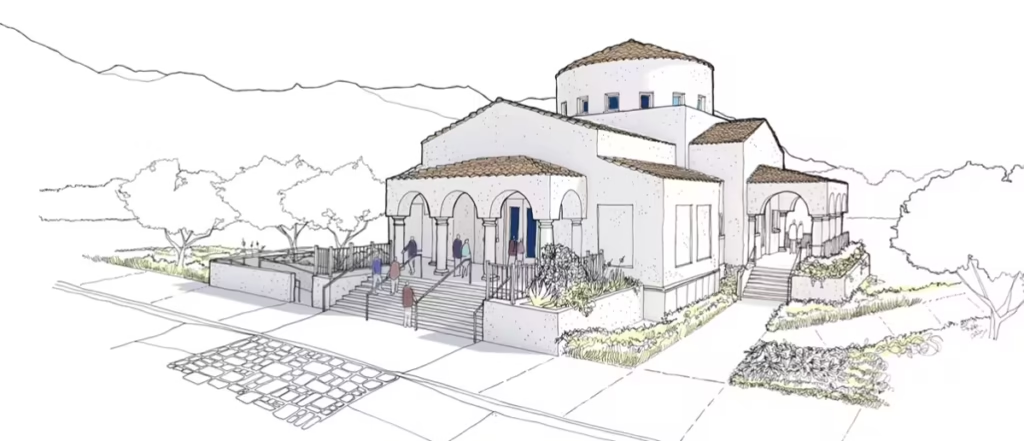
St. Demetrios Greek Orthodox Church has been a spiritual and cultural home for Greek faith in Tucson since the late 1940s. The parish’s first home came in 1947, when members of the local community purchased the former First Christian Church on Second Avenue. The parish later developed plans for a permanent home, and in 1955 land on Fort Lowell Road was acquired for a new church campus. The cornerstone for the new church was laid in 1967, and the Fort Lowell sanctuary was built and consecrated in 1968, becoming a landmark for Orthodox worship and Greek community life in Southern Arizona for decades.
Over the years, St. Demetrios grew into more than a church building. It became the center of a vibrant parish life that has served Southern Arizona through worship, fellowship, education, philanthropy, and cultural tradition. The parish is also known for its connection to the Tucson Greek Festival, one of the community’s best-loved cultural events. Hosted by St. Demetrios and the Tucson Greek community, the festival has long helped share Greek food, music, dance, and hospitality with the wider city while also supporting parish and community programs.
The church also holds a special place in parish history because of the Holy Bleeding Gospel, associated with an event the parish says took place during Holy Week in 1989. That sacred history remains an important part of the identity and memory of St. Demetrios.
In 2013, tragedy struck when a fire caused major damage to the Fort Lowell church. News reports at the time said the blaze, attributed to an unattended candle, caused more than $1 million in damage, and the sanctuary was described as a total loss. Even so, the parish continued forward with resilience, maintaining its worshiping life and preserving traditions such as the Greek Festival as the community worked through loss and recovery.
A new chapter began in 2022, when the parish moved to its current location on North Alvernon Way. Today, St. Demetrios is building toward the future, with fundraising underway for a new Byzantine-style church at the new site. That effort reflects both continuity and renewal: a congregation rooted in Tucson history, yet still growing and building for the generations to come.
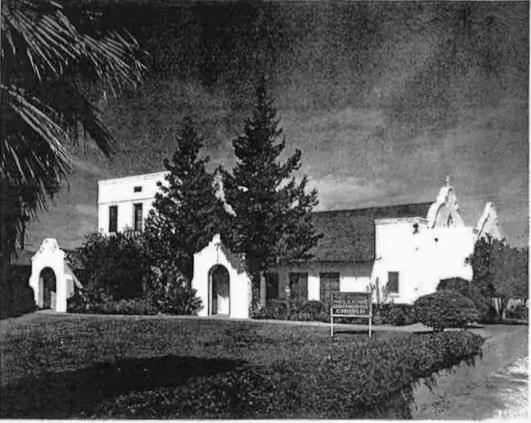
The first St. Demitrios church of Tucson was located on 2nd Ave and 5th St. It served the community from 1947 to 1968. stdemtucson.org
About Greek Orthodoxy
Greek Orthodoxy is one of the oldest Christian traditions in the world, tracing its roots directly to the early Church founded by Jesus Christ and His Apostles. The Orthodox Church has preserved the ancient faith, worship, and spiritual life of Christianity for nearly two thousand years. It is not simply a denomination that developed later, but part of the historic Church that has handed down its teachings, sacraments, and traditions from generation to generation.
In the Greek Orthodox tradition, faith is expressed through Scripture, Holy Tradition, prayer, worship, and the sacramental life of the Church. The Divine Liturgy is at the heart of Orthodox worship, where the faithful gather to pray, hear the Gospel, and participate in Holy Communion. Orthodox Christianity emphasizes a life of worship, repentance, spiritual growth, and union with God, while also calling believers to love, service, and compassion in everyday life.
The Greek Orthodox Church has a strong connection to the history, language, and culture of the Greek people, but it is open to all. Today, Greek Orthodox parishes welcome people from every background who are seeking the historic Christian faith. While Greek heritage remains an important part of parish life and celebration, the heart of Greek Orthodoxy is the timeless message of Christ and the life of His Church.
Orthodox Christianity is also deeply shaped by the lives of the saints, the beauty of its prayers and hymns, and the use of holy icons, which serve as windows into the spiritual life of the Church. Through fasting seasons, feast days, and the church calendar, Orthodox Christians live their faith not only on Sundays, but throughout the year.
At its core, Greek Orthodoxy is about knowing God, being transformed by His grace, and living in communion with Him and with one another in the life of the Church.